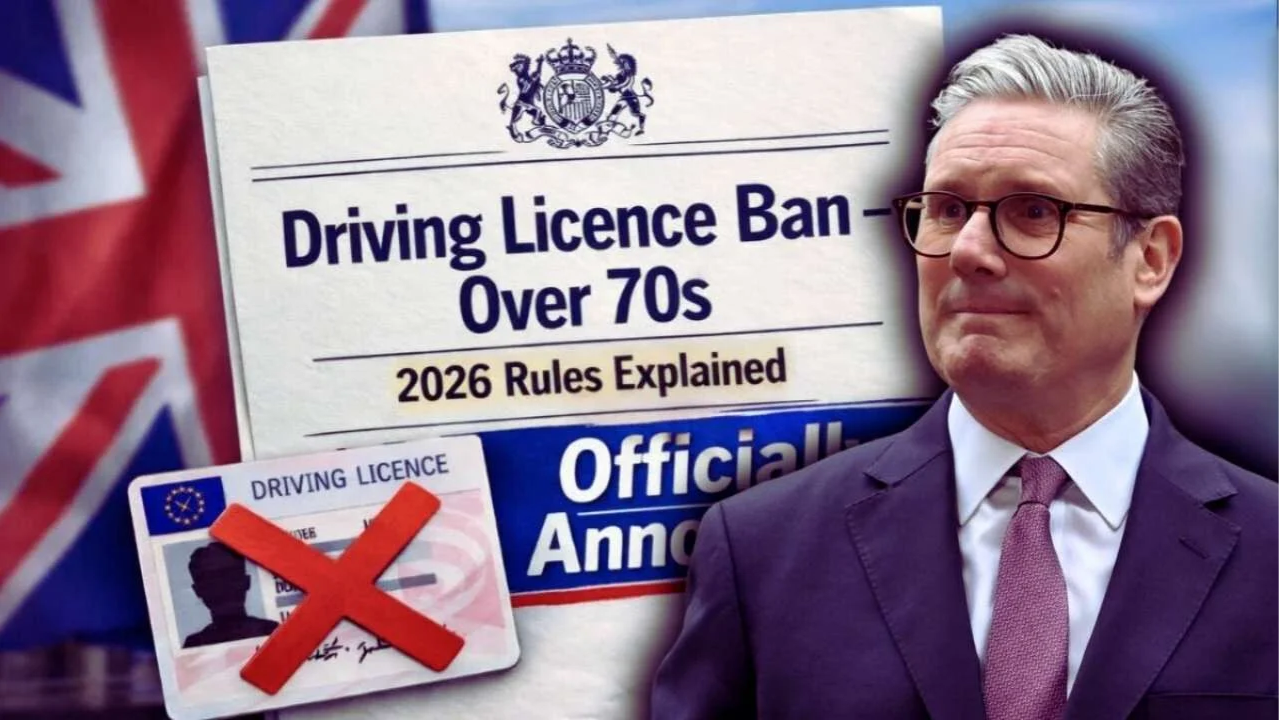
Recent headlines have caused confusion among older motorists by suggesting that the UK has introduced a driving licence ban for people over the age of 70. In reality, there is no automatic ban based solely on age. However, drivers who reach this milestone must follow specific rules set by the Driver and Vehicle Licensing Agency (DVLA) to keep their licence valid.
Understanding these rules is important because failing to renew a licence or meet the required standards could make it illegal to drive. Here is everything drivers need to know about the current regulations and possible changes that may affect older motorists in the coming years.
Also Read
DWP Confirms New State Pension Payments for People Born Before 1961 – Money Arriving This Week
4 Driving Law Changes From April 2026 Every Over-60 Driver Must Know
Do Drivers Lose Their Licence at Age 70?
In the UK, a standard driving licence does not last forever. When drivers reach their 70th birthday, their licence technically expires. This does not mean they are banned from driving permanently. Instead, they must renew their licence with the DVLA if they want to continue driving legally.
Also Read
New Driving Laws 2026: Urgent Update for UK Drivers Over 62 – 6 Big Changes You MUST Know
State Pension March Boost — Double £60 Payment Confirmed for Millions
The renewal process is usually straightforward and free of charge. Once renewed, drivers can continue using their licence just as they did before.
However, after turning 70, licences must be renewed every three years rather than every ten years as required for younger drivers.
How the Licence Renewal Process Works
The DVLA normally sends a reminder letter about three months before a person’s licence expires at age 70. Drivers can renew their licence in several ways:
- Online through the official DVLA website
- By completing the renewal form sent by post
- By obtaining forms from a Post Office
During the renewal process, drivers must confirm that they are medically fit to drive and that they meet the legal eyesight standards required for safe driving.
Eye Test Rules for Older Drivers
One of the most important requirements for drivers over 70 involves eyesight. UK law states that drivers must be able to read a vehicle number plate from 20 metres away.
Currently, drivers simply confirm that they meet this requirement when renewing their licence. However, road safety experts have suggested introducing mandatory eyesight tests during licence renewal for older drivers.
If these proposals are implemented in the future, drivers over 70 may need to provide proof of an eye test every three years when renewing their licence.
Medical Conditions That Must Be Reported
Drivers are legally required to inform the DVLA if they develop certain medical conditions that could affect their ability to drive safely.
Examples include:
- Serious vision problems
- Epilepsy or seizures
- Heart conditions
- Dementia or cognitive disorders
- Neurological conditions affecting movement
If a condition is reported, the DVLA may request medical evidence or further assessments before deciding whether the person can continue driving.
Vehicle Categories That May Change After 70
Another rule that sometimes surprises drivers involves vehicle categories on their licence. Certain categories, particularly those allowing drivers to operate larger vehicles, may expire at age 70 unless additional medical forms are completed.
These include licences for:
- Medium-sized trucks (C1 category)
- Minibuses (D1 category)
Drivers who want to keep these entitlements must usually undergo medical examinations and submit extra paperwork during licence renewal.
Why the Rules Exist
The UK government does not impose strict age limits on driving because many older people remain safe and capable drivers well into later life. However, the renewal system ensures that drivers continue to meet health and safety standards.
Vision problems, slower reaction times, and certain medical conditions become more common as people age. Regular licence renewals help authorities ensure that drivers remain fit to drive.
These checks are intended to improve road safety while still allowing older citizens to maintain independence.
Possible Future Changes to Driving Laws
The government has been reviewing several road safety proposals that could affect drivers in the future. Some of the ideas under discussion include:
- Mandatory eyesight tests during licence renewal
- Stricter roadside vision checks by police
- Improved driver health reporting systems
- Greater use of vehicle safety technology
These proposals are part of a wider strategy aimed at reducing road accidents and improving safety across the UK.
What Drivers Over 70 Should Do
Older drivers can continue driving safely and legally by following a few simple steps:
- Renew their licence before it expires
- Have regular eyesight tests with an optician
- Report any relevant medical conditions to the DVLA
- Stay updated about new driving regulations
Taking these precautions helps ensure drivers remain confident behind the wheel and fully compliant with UK law.
Conclusion
Despite rumours circulating online, the UK has not introduced a driving licence ban for people over 70. Instead, the law requires drivers to renew their licence every three years after reaching this age and to confirm that they remain medically fit to drive.
Possible future changes, such as mandatory eyesight tests, may introduce additional checks, but the goal is to improve road safety rather than prevent older people from driving.
For millions of senior motorists, understanding these rules ensures they can continue enjoying the independence and mobility that driving provides.